
 By Kim Steve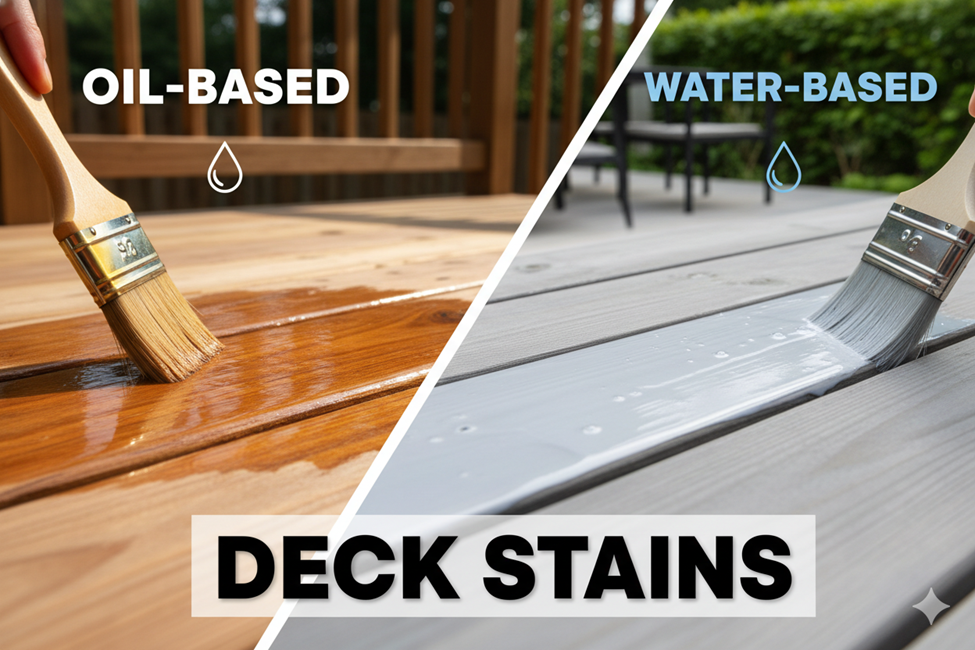
Got a gorgeous timber deck out back? Then you already know it’s the ultimate spot for a weekend barbecue or a quiet evening beer. But keeping those boards pristine when the Aussie weather is throwing everything at them? That takes serious elbow grease.
We need to talk about the science of wood protection. You see, deck staining isn’t just about slapping on a pretty colour to make the yard look flash. It’s your timber’s frontline defence, fighting off brutal UV rays, coastal downpours, warping, and rot.
We’re going to end a dispute that has been the cause of numerous discussions in the hardware store: oil-based versus water-based finishes. They are as different as chalk and cheese, and both act in totally different ways when exposed to our very hot sun. So get a coffee and let’s pinpoint exactly what your garden calls for.
Oil-Based Coatings
Imagine that you have dropped olive oil on a paper towel. You will see how the oil is absorbed by the fibres of the towel. This is a very good analogy of what is happening here. The formula dives incredibly deep into the timber’s pores, filling them up so water has absolutely nowhere to go.
Ask any traditionalist, and they’ll swear blind about the importance of oiling your deck. Why? Because nothing beats that rich, warm glow that genuinely enhances the natural grain.
The Good Stuff:
- Deep Defence: It nourishes the wood from the inside out while slamming the door shut on moisture, preventing the boards from warping and cracking.
- Graceful Ageing: As it ages, it simply fades rather than peeling off in hideous, flaky chunks.
- Easy Touch-ups: Usually, after preparing the deck well, you can reapply the finish without resorting to any drastic stripping.
The Drawbacks:
- A Waiting Game: Oil-based products may require up to 48 hours to completely dry, which makes the deck unusable for the entire weekend.
- Harsh Smells & Mess: High VOCs are why oil-based paints have that unbearable smell. Also, you will still have to use your hands in contact with mineral spirits or turpentine when cleaning your brushes.
- Mould Magnet: If you reside in the humid tropics, be careful. As oil is an organic food source, it means that it practically calls mould and algae to come and set a feast on your timber.
Water-Based Stains
If oil acts like a sponge, a water-based finish is essentially a heavy-duty raincoat. It doesn’t dive as deep; instead, it creates a tough, flexible film right on top of the surface to repel moisture.
The Good Stuff:
- Sun Shield: Modern water-based technology handles our punishing UV radiation like an absolute champion, holding colour brilliantly against fading.
- Fast and Fresh: Want your deck back quickly? It dries in just a few short hours, often between 1 and 6 hours.
- Breeze to Clean: You can clean your gear with plain soap and water.
- Fights the Fungi: Because the formula is inorganic, mould and mildew naturally hate it, meaning fewer black spots.
The Drawbacks:
- Tricky Application: You have to be very careful. If you apply too much, the liquid will gather on the surface, which will lead to peeling problems in the future.
- Tougher Recoats: Reviving the deck can mean heavy sanding. Sometimes a chemical soak is needed first. Getting the surface right takes effort when recoating.
- Masks the Grain: Surface layer might hide wood texture now and then. That top film sometimes dulls the natural look instead of enhancing it as oil would. Real grain loses some life under this coat, appearing flatter through time.
The Final Verdict
So, what’s the smartest choice? It genuinely depends on your postcode and your patience.
- Humid coastal area? Grab a water-based product to keep that pesky mould away.
- Want deep protection with an easy recoat down the line? Oil is still brilliant.
- Timber Type: Softwoods like pine absorb oil very well. Still, hardwoods or pressure-treated pine are usually much better with water-based finishes.
There is no kind of magic. You have to consider drying times and how much future work preparation you can accept.
Conclusion:
You may well be thinking this is going to give you a splitting headache, and you are right, only thinking of professional deck staining will be the smart one out of the two ways. Getting an expert on the tools ensures the timber is stripped, cleaned, and coated perfectly to handle extreme conditions. No lap marks. No peeling. Just a stunning outdoor space ready for years of entertaining.